



CRA roles are taking longer to fill and the shortage is not easing. Here is what the Q3 2026 market data means for sponsors and their monitoring strategy.
ClinLab Solutions Group celebrates National Staffing Employee Week 2026 by honoring the contract professionals driving life sciences forward across the country.

AI powered patient matching is helping top sponsors recruit three times faster with 40% fewer screen failures. Here is what that means for clinical research sites.

The FSP model is widely misunderstood. Learn what functional service provider really means, where it breaks down, and what good FSP delivery actually looks like.

Staffing gaps are one of the biggest threats to study timelines. Learn how flexible resourcing models help clinical research sites manage volume and reduce risk.

In the life sciences, every stage from early research to clinical trials and post-approval monitoring runs on a tight schedule. Teams are expected to hit critical milestones while navigating a maze of complex regulations. The challenge is finding specialized talent quickly enough to keep studies moving. A vacant role or a poor hire can cause […]
The post How Specialized Staffing Keeps Preclinical, Clinical, and Post-Approval Work on Track appeared first on ClinLab Solutions Group.

Drawn to medicine, but not the day-to-day of patient care? Holding an MD opens doors far beyond the exam room. In today’s health-driven economy, companies across industries—from biotech to health tech, pharma, legal, and consulting—are actively seeking professionals with deep medical expertise. An MD isn’t just a credential; it’s a strategic advantage. Your training equips […]
The post 5 Alternative Careers for MDs appeared first on ClinLab Solutions Group.

How Long Do Scientists Stay in a Job in 2025, and What Does It Mean for Hiring Managers? Science professionals are staying in jobs for shorter periods than ever before. According to the latest U.S. Bureau of Labor Statistics data, median tenure for science roles is down to 3.7 years—and often lower in fast-moving sectors […]
The post How Long Scientists Stay in a Job in 2025, and What It Means for Hiring Managers appeared first on ClinLab Solutions Group.

Is Your Science Career Stuck? Explore the Pros and Cons of Moving to a Biotech Hub for Lab Professionals, Researchers, and Scientists As a science staffing firm, we talk to candidates every day who ask: Should I move to grow my career in science? It’s a big decision—and the right answer depends on your goals, […]
The post Should You Relocate to a Science Hub? appeared first on ClinLab Solutions Group.
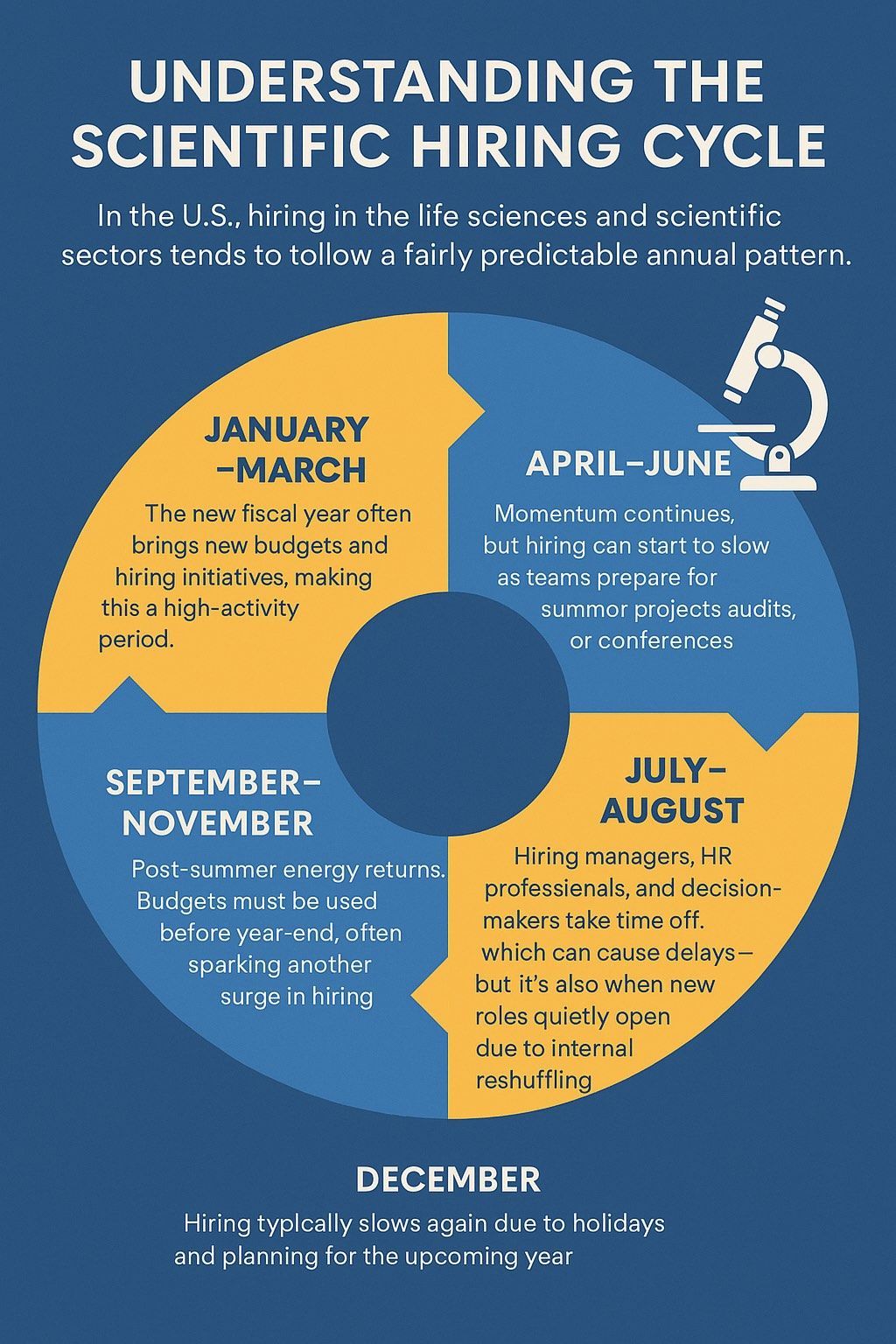
Summer might feel like the slow season—vacation mode kicks in, schools are out, and the office AC becomes your best friend—but for job seekers in scientific roles, the warmer months hold strategic opportunities. While the U.S. hiring cycle does have its seasonal rhythms, summer can be a surprisingly smart time to be on the job […]
The post What to Expect When Job Hunting This Summer appeared first on ClinLab Solutions Group.
